Marine Electrical System Upgrades: Battery Banks, Inverters, and Solar for North Carolina Boats
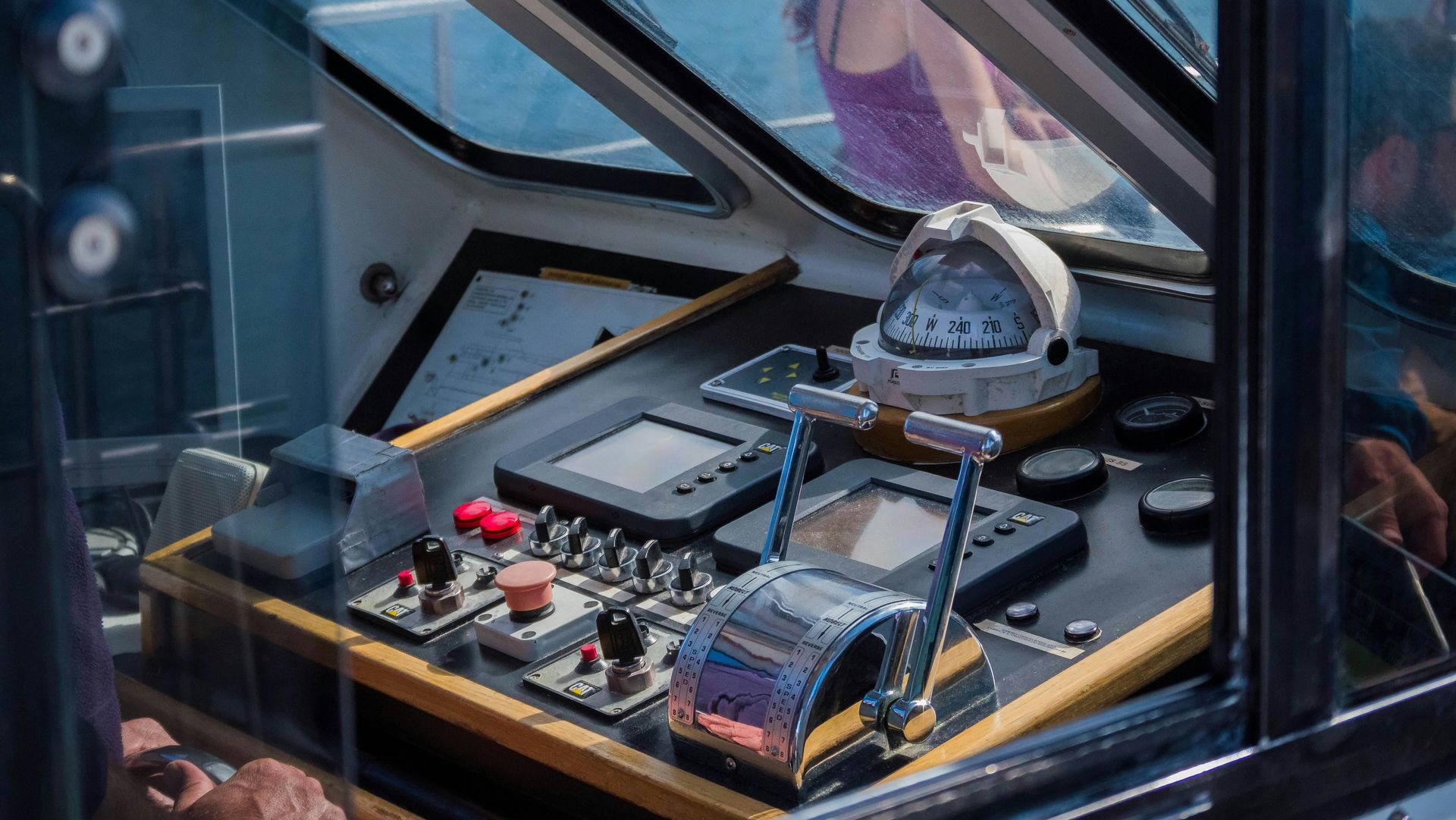
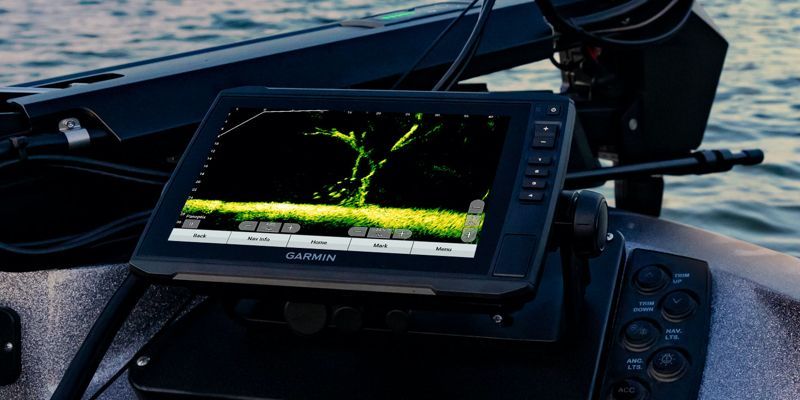
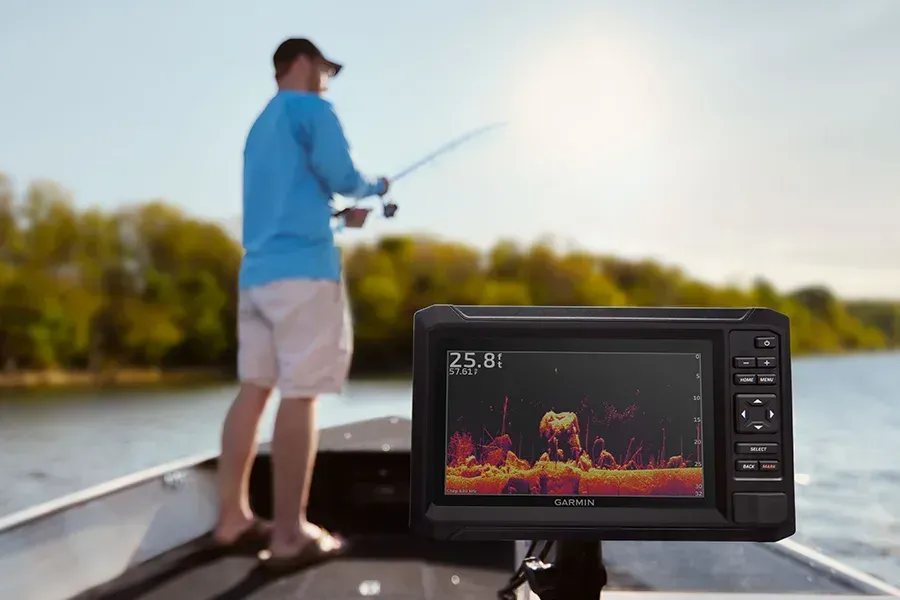
The electrical demand on a modern fishing boat looks nothing like it did ten years ago. A live sonar unit, an electric trolling motor, a forward-facing sonar transducer, and a networked MFD running simultaneously draw continuous current that flattens a starting battery before noon. The power budget on a contemporary bass tournament boat is a real engineering problem — and most of the time, the boat left the factory without an electrical system designed for it.
CVMS installs marine electrical upgrades — battery banks, inverters, solar charging, alternator upgrades, and shore power — on North Carolina boats from their shop in Salisbury, wiring to ABYC standards throughout. Here is what each upgrade actually does and what it solves.
Battery Banks: Matching Capacity to Load
The Right Choice: AGM or Lithium
The decision between absorbed glass mat (AGM) and lithium iron phosphate (LiFePO4) comes down to three practical variables:
Weight: a 100 Ah lithium battery weighs approximately 26 pounds. An AGM of equivalent rated capacity weighs 63 pounds. Across a three-battery bank, that is 110 pounds of difference — enough to affect how a bass boat sits on its trailer and how it handles at speed.
Usable capacity: AGM batteries should not be discharged below 50 percent without accelerated degradation — so a 100 Ah AGM provides 50 usable amp-hours. Lithium can be discharged to 20 percent without equivalent harm, giving 80 usable amp-hours from the same rated capacity. That 60 percent improvement in usable energy is the number that matters for a long day on High Rock Lake with live sonar running.
Cost: lithium batteries cost three to four times the upfront price of AGM. Over a ten-year cycle — where AGM requires replacement every three to four years and lithium reaches eight to ten years with proper management — the total cost gap narrows significantly. The break-even point is typically around year six for high-use fishing applications.
CVMS installs Interstate Batteries AGM products and can source lithium systems from leading manufacturers. The correct recommendation depends on your electrical load, how many hours per season you run, and your budget. CVMS provides a specific recommendation — not a generic answer — based on those variables.
Bank Configuration
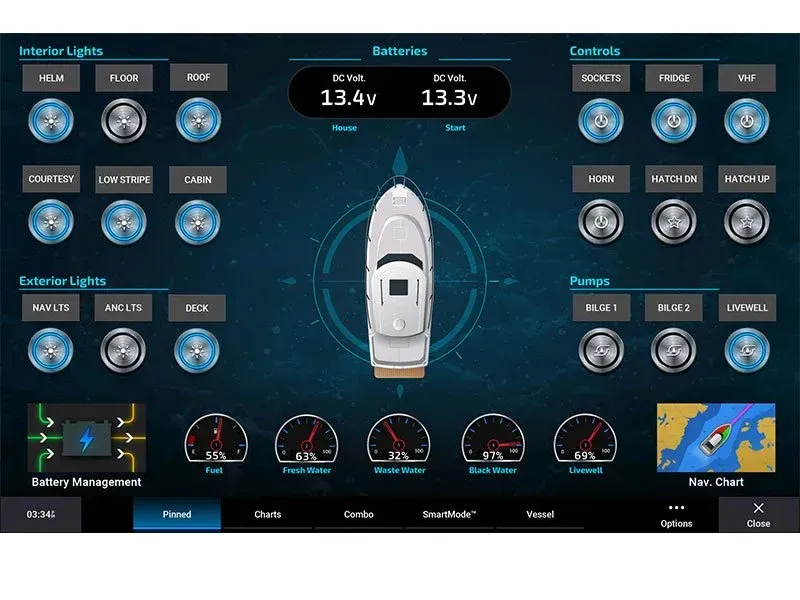
High-demand fishing boats typically need a dedicated starting battery separate from the house and trolling bank. Boats with high-capacity electric trolling motors and multiple live sonar units may require a three-bank configuration with a battery management system (BMS) controlling charge routing. CVMS designs the bank configuration for the actual load — not a generic template applied to every boat.
Alternator Upgrades: The Charging System Comes First
A battery bank that cannot recharge at the rate it is being depleted is a bank on a countdown clock. Modern high-capacity electric trolling motors, live sonar running at continuous high-frequency output, and multiple MFDs create a combined draw that stock alternators on some outboard platforms are not sized to keep up with during typical fishing use.
CVMS assesses alternator output against the total electrical load as part of marine electrical projects. Where the stock alternator is undersized, an upgraded high-output alternator or a secondary charging source — an onboard charger connected to shore power when the boat is at the dock, or a dedicated DC-to-DC charger managing battery bank isolation — resolves the shortfall. This is the step most marine electrical upgrades skip. It is also the reason many upgraded battery banks still run flat by afternoon.
Running out of power before you're done fishing? CVMS designs and installs marine electrical upgrades sized for your actual load. Call (704) 267-7259 or visit cvmsnc.com/marine.
Inverters: AC Power When You Need It
A marine inverter converts DC battery power to 120V AC for standard appliances, battery chargers, and equipment aboard. On a fishing boat, the most common use cases are charging personal electronics, running a coffee maker or microwave, and powering tools during extended trips.
Inverter sizing must match the load. A 600-watt inverter handles phone and tablet charging. A microwave requires 1,200 watts minimum startup draw. Specifying the wrong size produces an inverter that trips its overload protection every time you use the appliance you installed it for.
Installation requires correct cable gauge for the DC input, appropriate breaker protection on both DC input and AC output, and proper ventilation of the inverter compartment. An undersized cable on a 2,000-watt inverter is a fire risk. CVMS wires inverter installations to ABYC E-11 standards — correct conductor sizing, marine-rated overcurrent protection, waterproofed terminal connections.
Solar Charging: Keeping the Bank Up at the Dock
A boat that sits at the dock between weekends with a bilge pump float switch, electronics on standby, and a livewell aeration timer will slowly drain its battery bank between uses. Solar charging addresses this specific problem: maintaining battery state-of-charge without shore power and without the owner connecting a charger after every outing.
CVMS installs flexible marine solar panels — the low-profile format that works on boat decks without rigid frames — and MPPT charge controllers that optimize charging current from variable light conditions. A 200-watt panel array with a 30-amp MPPT controller provides meaningful maintenance charging for a dual-bank AGM setup on a typical North Carolina boat. Solar charging supplements the alternator — it does not replace engine-based recharging — but it eliminates the dead-battery discovery that starts every other fishing season for owners who do not dock near shore power.
Shore Power: AC at the Dock
Shore power connects the marina pedestal to an onboard AC system, allowing battery chargers, refrigeration, and AC comfort equipment to operate without engine run time. CVMS installs shore power inlets, isolation transformers, and AC distribution panels compliant with ABYC E-11.
Shore power is not a residential electrical project done on a boat. The corrosive marine environment, shock hazard in and around water, and the galvanic corrosion that improperly configured shore power systems introduce to metal underwater fittings are specific marine problems. ABYC E-11 and E-13 standards exist because these failure modes have caused fires, electrocution, and hull loss. CVMS wires shore power installations to those standards throughout.
Frequently Asked Questions
Do I need lithium batteries for my Minn Kota or Garmin Force trolling motor?
Lithium is recommended for high-performance electric trolling motors — more usable capacity, lighter weight, faster recharge, and better voltage stability under high draw than AGM. A correctly sized AGM bank also works. CVMS evaluates your specific trolling motor model, fishing pattern, and electrical load to recommend the right chemistry and bank size before any purchase is made.
Can CVMS add to my existing electrical system or does it need to be replaced?
CVMS can upgrade individual components — adding a battery to an existing bank, upgrading the charging system, adding solar — without replacing everything. Where existing wiring is undersized, improperly fused, or non-compliant, CVMS identifies those issues and quotes the remediation as part of the upgrade rather than discovering them mid-project.
What does ABYC compliance mean for marine electrical work?
ABYC standards E-11 (AC electrical systems) and E-13 (DC electrical systems) specify conductor sizing, breaker protection, terminal requirements, and installation practices for marine environments. They are not legally required for recreational boats but represent the industry-recognized standard for safe marine electrical systems. Following these standards is the difference between an installation that is safe in the environment and one that is not.
Does CVMS assess the full electrical system or just the specific component being added?
CVMS assesses the full system. Adding a new battery bank to an electrical system with an undersized alternator or aging wiring does not solve the power problem — it adds capacity to a system that cannot charge it or safely carry the current. The full assessment is what produces an upgrade that actually works.
Whether you need more capacity, solar maintenance charging, or a complete electrical design for a new electronics build — CVMS does the full scope correctly. Call (704) 267-7259 or visit cvmsnc.com/marine. 420 Montclair Dr., Salisbury, NC 28144.