Fish Finder and Sonar Installation in North Carolina: What Actually Makes the Difference
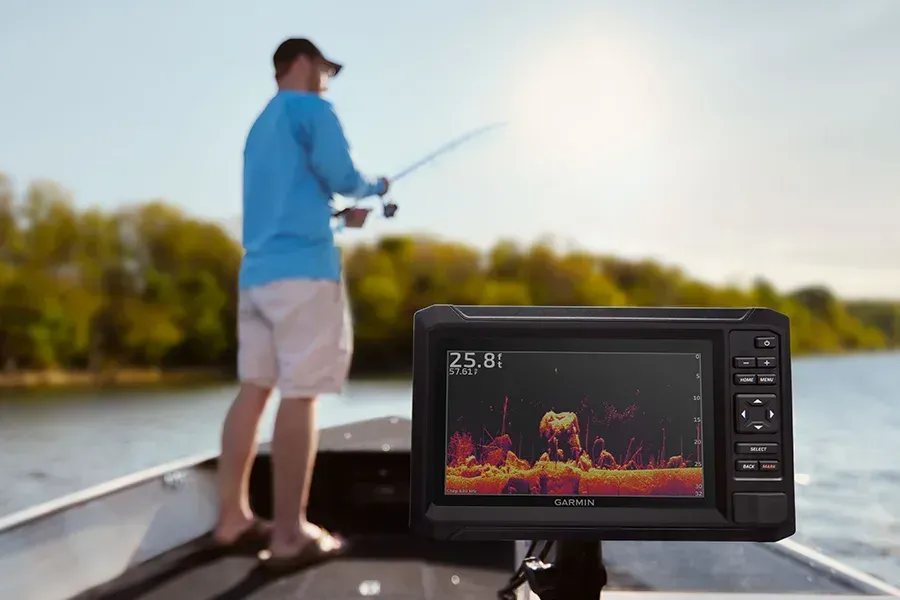
The same Humminbird MEGA Live unit delivers completely different results depending on how and where it is installed. A transducer mounted in the wrong location produces interference at speed, missed bottom readings, or a sonar return that looks like noise rather than structure. The unit gets blamed. The installation was the problem.
CVMS installs fish finders, depth sounders, and live sonar systems for fishing boats across North Carolina — serving High Rock Lake, Lake Norman, Lake Tillery, and the full Yadkin chain from their shop in Salisbury. Here is what a professional sonar installation actually involves, what separates it from a DIY mount, and why the installation decision determines the performance you actually experience on the water.
The Three Installation Decisions That Determine Sonar Performance
1. Transducer Placement
Transducer placement is the most consequential installation decision in a fish finder setup. No sensitivity adjustment or software filter corrects the interference caused by mounting in a location that introduces hull turbulence, prop wash, or cavitation at speed.
The principles CVMS applies for North Carolina fishing boats:
- Bass boats: transom-mount transducers are positioned starboard of the motor to avoid prop wash at trolling and moderate speeds. The transducer face must be parallel to the hull bottom — even a few degrees of tilt produces beam angle errors at depth that misrepresent bottom contour
- Pontoons: transducers mounted between tubes must avoid aeration from tube ends at speed. CVMS evaluates the specific pontoon geometry before recommending mount position
- Through-hull applications: epoxy-in transom saucer installations eliminate turbulence interference entirely and are used where maximum performance at speed is the priority over installation simplicity
- Live sonar transducers — MEGA Live, Active Target 2, LiveScope: mounting angle determines the cone presentation. Correct forward-scan angle versus down-scan angle versus perspective mode requires evaluation of the intended use before anything is mounted
2. Cable Routing and Electrical Isolation
A fish finder cable routed alongside bilge pump power leads, inverter wiring, or trolling motor cables without shielding picks up electrical interference that appears in the sonar return as banding, horizontal lines, or random noise. This is not a unit malfunction — it is a routing problem. CVMS routes sonar cables away from interference sources, uses shielded conduit where separation is constrained, and ensures the unit's ground is clean and isolated.
The difference between a noisy sonar return and a clean one is sometimes nothing more than moving a signal cable six inches away from a power wire. CVMS catches this at installation rather than leaving it for the owner to diagnose on the water.
3. NMEA 2000 Network Integration
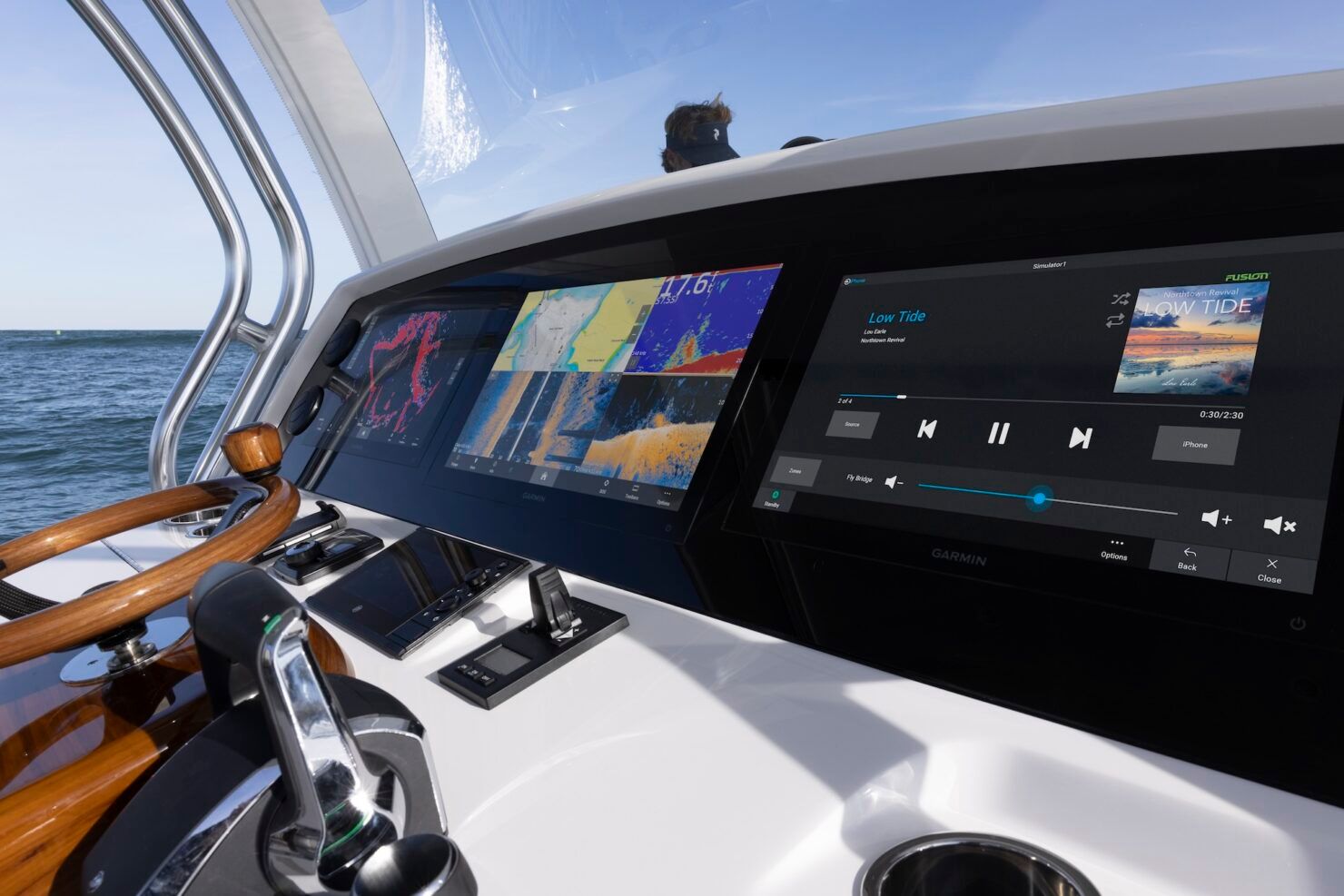
A fish finder on a properly configured NMEA 2000 backbone shares GPS position with the chartplotter, engine data with the MFD, and heading data with the autopilot. A standalone unit misses all of these integrations. CVMS connects sonar units to the network, configures device addressing, and verifies cross-device data sharing at the installation. The owner leaves with a system that works together, not a collection of devices that happen to share a console.
CVMS installs live sonar and fish finders for fishing boats on High Rock Lake, Lake Norman, and across the NC Piedmont. Call (704) 267-7259 or visit cvmsnc.com/marine to schedule a sonar installation consultation.
Live Sonar Systems: What CVMS Installs
Humminbird MEGA Live Imaging
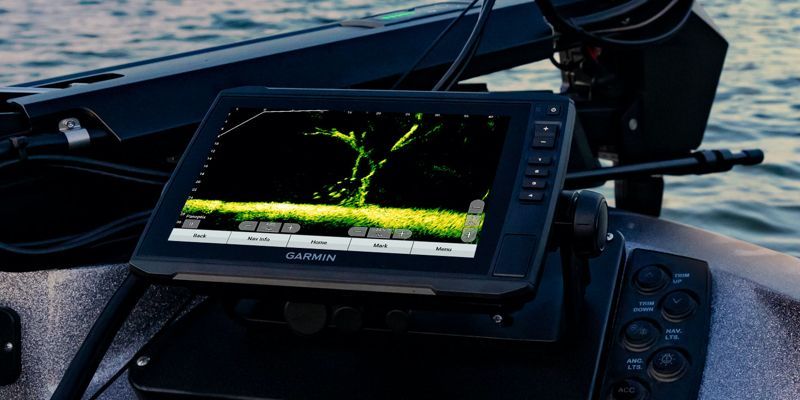
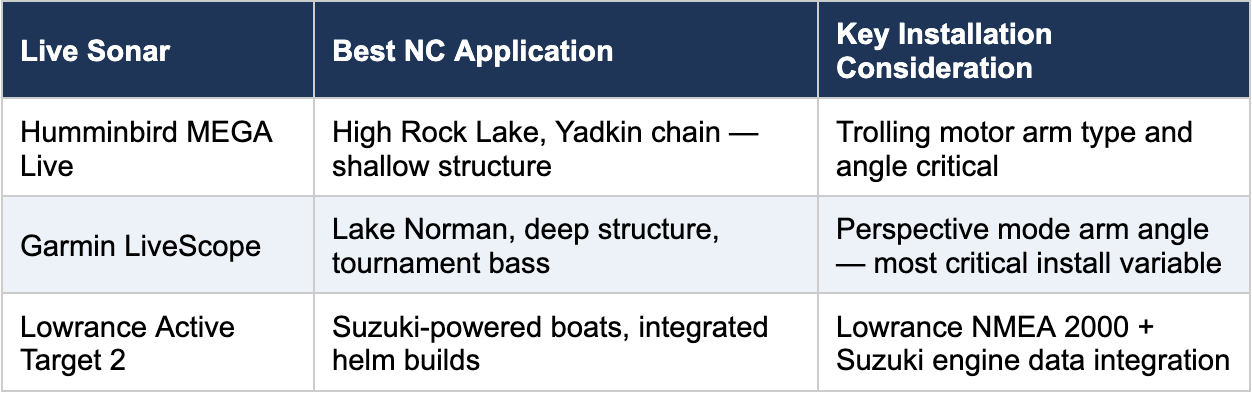
MEGA Live Imaging provides real-time forward and around-the-boat sonar at frequencies that resolve individual fish and lure interaction at distances up to 200 feet ahead of the vessel. It is the dominant live sonar choice on High Rock Lake and the Yadkin chain, where the shallow, structure-heavy environment rewards the forward scan mode that MEGA Live executes best.
Installation of MEGA Live requires correct trolling motor integration or a dedicated transducer arm mount depending on the vessel. The mounting solution determines whether the sonar performs as the technology is capable of or as a compromised version of it. CVMS specifies the correct mount for the hull and motor combination before installation.
Garmin Panoptix LiveScope
LiveScope is the dominant live sonar on Lake Norman tournament bass boats. The perspective mode transducer — the configuration that provides the "swimming through the water" real-time view that has changed how tournament anglers fish structure — requires a specific arm mount that places the transducer at a precise angle below the trolling motor. Correct mounting angle is the most critical installation variable for LiveScope performance. CVMS has installed LiveScope on Lake Norman fishing boats across multiple hull types and calibrates the mount to the specific vessel geometry.
Lowrance Active Target 2
Active Target 2 provides competitive live sonar performance with tight Suzuki engine data integration through Lowrance's NMEA 2000 implementation. On boats powered by Suzuki outboards — the repower platform CVMS builds — Active Target 2 and HDS Live provide a clean integrated system where engine data appears on the same MFD displaying the live sonar. CVMS installs and integrates Lowrance systems as part of the combined repower-and-electronics builds that are common at the shop.
Minn Kota Dealer and Trolling Motor Integration
CVMS is a Minn Kota dealer and installs Ultrex, Ulterra, and Terrova models. Trolling motor integration with the fish finder network — Garmin Force or Minn Kota with the Garmin or Humminbird network — is part of the installation scope at CVMS. Spot-lock, follow-the-contour, and target-lock features only work correctly when the trolling motor and the chartplotter are communicating on the same network, configured correctly at installation. CVMS completes that integration as standard, not as an add-on.
Frequently Asked Questions
How long does a fish finder installation take at CVMS?
A single fish finder with transducer takes one day. A full live sonar build — MFD, live sonar transducer, trolling motor integration, and NMEA 2000 network — takes two to three days depending on hull complexity.
Can CVMS fix a sonar that is already installed but performing poorly?
Yes. Poor performance is frequently a transducer placement, cable routing, or network configuration problem rather than a unit failure. CVMS diagnoses existing installations and corrects the root cause. Bring the boat to 420 Montclair Dr., Salisbury, NC.
Should I buy the fish finder from CVMS or order it myself?
Buying through CVMS ensures the unit is in stock when your installation is scheduled, the warranty is registered correctly, and compatibility questions are resolved before installation. Owner-supplied units are accepted — the CVMS installation warranty covers workmanship; unit warranty goes through the manufacturer.
Does CVMS install both the repower and the electronics?
Yes — and doing both in the same visit is the most efficient approach. When the engine is off the boat for a repower, the rigging and console are accessible, making electronics upgrades cleaner to execute. Discuss both at the estimate stage and CVMS quotes the full scope together.
Your fish finder performs at the level of the installation. Call CVMS at (704) 267-7259 or visit cvmsnc.com/marine. Garmin, Humminbird, and Lowrance installation on bass boats, pontoons, and fishing platforms across the NC Piedmont — High Rock Lake, Lake Norman, and beyond.